
By C.S. Hagen, In Forum
September 24, 2023
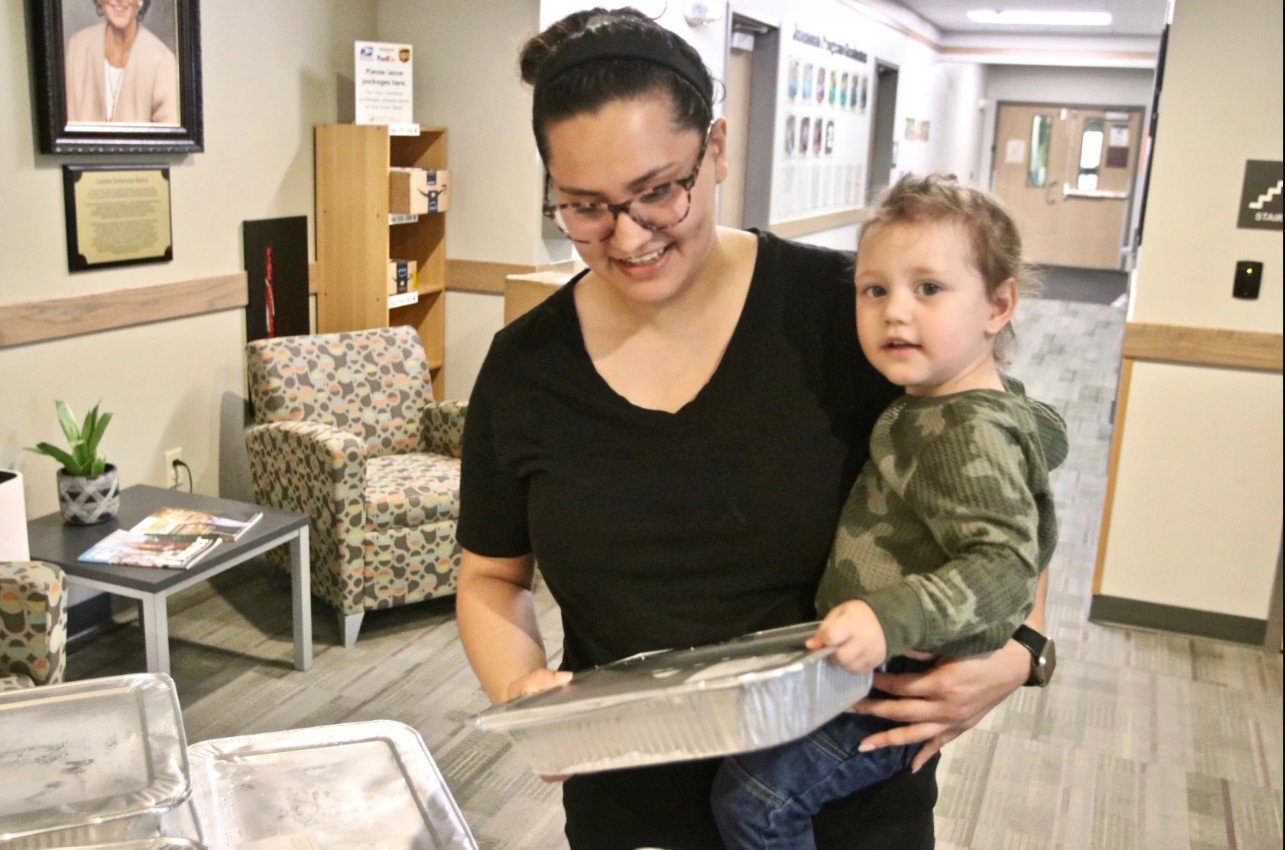
FARGO — Alliyah Rosales and her 2-year-old son, Micah, pored over the tin containers of frozen dinners at the Jeremiah Program.
Chicken burritos. Roast beef. Turkey meatballs.
Micah wasn’t a fan of the meatballs, but he loves the chicken burritos, Rosales said. As a single mother, working and earning a finance degree from North Dakota State University while living at the Jeremiah Program, she was grateful for the meal provided by Great Plains Food Bank on Tuesday, Sept. 19.
Earlier this year, Great Plains Food Bank announced it hit a three million pound food shortage as donations decreased 15%, even though demand for food increased 14%. In the face of low supplies, the nonprofit has been looking for creative ways to get nutritious food to hungry people.
One of the solutions they found is partnering with local restaurants like Power Plate Meals, Brew Kitchen and Catering, and with nonprofit Second Harvest Heartland to kickstart the Kitchen Coalition program. The program was piloted last winter and in July became an official Great Plains Food Bank program, said Zoe Absey, community initiatives manager with the food bank.
“We know that not everyone facing hunger has the home, health or ability to use the groceries our food bank offers," she said. "So, we’ve built a network of local restaurants and caterers that turn food bank ingredients, or extras of their own, into nutritious, freshly prepared meals. Then we work with nonprofits to help distribute meals.”
“We know that not everyone facing hunger has the home, health or ability to use the groceries our food bank offers," she said. "So, we’ve built a network of local restaurants and caterers that turn food bank ingredients, or extras of their own, into nutritious, freshly prepared meals. Then we work with nonprofits to help distribute meals.”
“If you have a meal or two in your freezer, that can be very cost effective," she said. "Rising costs and inflation affected everything. I think this is something that can come in and eliminate some of that, and it’s a benefit."
For Rosales, sometimes she has to weigh whether to buy a tank of gas for her car so she can go to work or to buy groceries. If she can’t earn a paycheck, she can’t provide for her son, she said.
“Do I wait until I’m down to my last tank or buy groceries now? As a mother, I will sacrifice my own life because of Micah here," Rosales said, noting the Kitchen Coalition helps her not have to choose between food and work. "For me, it means less stress, and this helps me focus on my studies."
In addition to delivering prepared meals once a week for the Jeremiah Program, Great Plains Food Bank also delivers on Sundays to the Downtown Engagement Center, as well as the F5 Project and the Veterans Drop-In Center in downtown Fargo.
Hunger is still a real issue in the metro area and across North Dakota and Minnesota, said Jared Slinde, spokesperson for Great Plains Food Bank.
“We continue to see an increase in need for food assistance along with less food available to our hungry neighbors in need,” he said.
The most recent statistics the Great Plains Food Bank has on record reported that, so far this year, they have seen a 14% increase in need for food while the total amount of food the organization has been able to deliver fell by 15%.
“Last year, we served more than 144,000 individuals across North Dakota and Clay County, Minnesota. This was the second-highest total in the organization’s history and higher than any year prior to the COVID-19 pandemic,” Slinde said.